
Open Slack. While it loads, you see a message. “You look nice today.” Or “Searching for meaning in work.” Or “Testing the gravitational constant in a universe where everything feels heavy.” Or a quote from a teammate you added yourself.
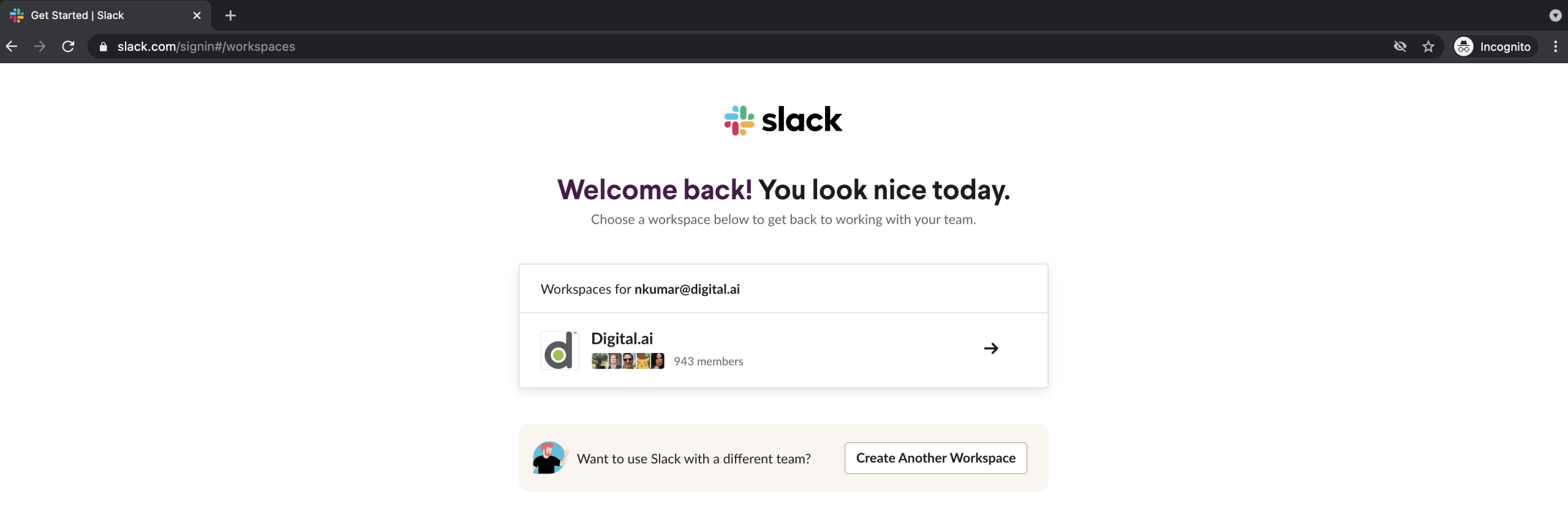
It takes maybe 3 seconds. You barely notice it. But it’s the first thing you experience every time you open the app. And over hundreds or thousands of opens, those 3-second moments compound into a feeling about the product that competitors can’t replicate with features.
Andrew Wilkinson, who worked on Slack’s early branding, described the thinking: “Most enterprise software looks like a cheap 70’s prom suit. So we made Slack look like a confetti cannon had gone off.”
The loading messages are a tiny piece of that philosophy. But they’re maybe the most instructive piece because they cost almost nothing to build, take up zero product surface area (they only exist during a moment that would otherwise be dead time), and they’ve become one of the most referenced details in product design.
The setup
Slack launched in 2013 out of a failed video game company (Tiny Speck, which built Glitch). The internal chat tool the game team used was more valuable than the game. Stewart Butterfield pivoted.
From day one, Slack’s design team treated personality as a product feature. Not in an annoying way. Not pop-ups or mascots or forced fun. Just small moments of warmth in a product that people spend 8+ hours a day inside.
The loading messages are the most visible example. But Slack’s personality shows up everywhere:
→ Custom emoji (any team member can upload their own)
→ Slackbot responses (teams can program custom auto-replies to trigger phrases)
→ The /shrug command produces ¯_(ツ)_/¯ → Hex color codes typed in messages display the actual color swatch
→ Channel topic descriptions that teams turn into running jokes
→ The release notes are written in conversational, sometimes funny prose
Each of these details is tiny. None of them would show up on a feature comparison spreadsheet against Microsoft Teams. But collectively they create a product that feels like it was built by people who use it and enjoy using it.
💡 Personality in enterprise software isn’t a nice-to-have. It’s a switching cost.
The play
1. Dead time is brand time
Every app has loading states. Server fetches. Page renders. Authentication handshakes. These moments are typically treated as engineering problems: make them faster, add a spinner, move on.
Slack treated them as design opportunities. The loading screen is dead time. The user is stuck. They can’t do anything except wait. That’s actually a high-attention moment (same principle as the Chrome dinosaur game). The user is looking at the screen with nothing else competing.
Most enterprise apps waste this moment. A spinner says “please wait.” Slack’s loading messages say “we know you’re waiting, here’s something to make it slightly less boring.”
The messages rotate. Some are playful (“Shaking the magic 8-ball”). Some are nerdy (“Testing the gravitational constant of the universe”). Some are just warm (“You look nice today”). And teams can add their own, which means the messages become customized to each workspace’s culture and inside jokes.
The customization is the key move. Once a team adds its own loading messages, the loading screen becomes theirs. It reflects their personality, their humor, their inside references. That’s not a feature you switch away from. You can migrate your message history to another platform. You can’t migrate the feeling of opening the app and seeing a joke your coworker wrote.
2. Personality compounds over daily use
Most brand interactions are one-time events. An ad. A landing page. A sales demo. You experience it once and maybe remember it.
Slack’s loading messages happen every single time you open the app. 15-20 times a day for an active user. That’s 3,750-5,000 micro-interactions per year. Each one lasts 2-3 seconds. Each one is slightly different. Each one reinforces the feeling that Slack is a product with personality.
Compare this to how Microsoft Teams loads (spinning dots, no message) or how Zoom loads (logo + spinner). Those products have the same number of loading events per user per year. They just waste all of them.
The cumulative effect is hard to measure but easy to feel. Ask someone who uses Slack why they prefer it to Teams. They’ll talk about threads, integrations, speed. But underneath the feature comparisons is a feeling that Slack “gets it” and Teams doesn’t. That feeling comes from thousands of tiny moments like loading messages, emoji reactions, the /shrug command, and color swatches for hex codes.
3. The anti-enterprise positioning
Slack’s personality was a deliberate contrast to the enterprise software that came before it. Lotus Notes. SharePoint. Skype for Business. These products were functional, dull, and universally hated by the people forced to use them.
Slack positioned itself as the anti-enterprise tool. Software that respects you. Software that has a sense of humor. Software that doesn’t feel like it was designed by a procurement committee.
The loading messages are the purest expression of this positioning. They communicate: we built this product for the person using it, not for the IT department purchasing it. That distinction drove Slack’s entire bottom-up adoption model. Individual teams adopted Slack because they liked using it. Then they convinced other teams. Then the whole company adopted it. The purchase decision was made by the users, not by IT.
Microsoft understood this threat. Teams eventually copied some of Slack’s personality touches (custom emoji, GIF integration). But the personality feels grafted on rather than native. You can copy features. You can’t copy culture.
The payoff
Can micro-interactions actually influence enterprise purchasing decisions? Not directly. Nobody switches from Teams to Slack because of loading messages. But the cumulative effect of thousands of small personality moments creates a product affinity that makes users resist switching. When IT says “we’re moving to Teams,” the Slack users push back. Not because of one feature. Because of a feeling that’s been built over years of daily micro-interactions.
Is Slack losing this advantage inside Salesforce? Pre-acquisition Slack felt indie, playful, creator-built. Inside Salesforce, the product roadmap is driven by enterprise priorities. AI integrations. CRM connections. Admin controls. The loading messages still exist. But the culture that produced them is now one team inside a $250B conglomerate. Whether the personality survives the corporate absorption is an open question. The loading screen still says “You look nice today.” The product development priorities no longer come from the people who wrote that line.
Why don’t more enterprise products do this? Two reasons. First, most enterprise companies optimize for procurement, not for users. The buyer (CTO, IT director) doesn’t see loading messages in the sales demo. They see security certifications, admin controls, and pricing. Personality doesn’t show up in an RFP. Second, personality is risky. A loading message that one person finds charming, another finds annoying or unprofessional. Most enterprise companies default to bland because bland doesn’t offend anyone. Slack bet that users would rather have a product with personality than one without, and that the users would eventually drive the purchasing decision. They were right. Until Microsoft bundled Teams for free and the purchasing decision went back to IT.
Further reading
Keep ’em waiting: 7 loading page designs that make waiting almost fun (Appcues) ↗ Slack’s loading screen analyzed alongside other products. How skeleton screens, progress indicators, and personality moments reduce perceived wait time.
Fun & Flexible B2B Success: Slack (Fasproc, 2020) ↗ The confetti cannon quote. Custom emoji, Slackbot easter eggs, and why enterprise software doesn’t have to look like a cheap 70’s prom suit.
Nice UX Design: Slack’s hex color detail (NiceUXDesign, 2023) ↗ The tiny details that elevate Slack. Hex color codes displaying actual colors. Small things that save time and create delight.
→ What does your product do during the 3 seconds while it loads? That’s 3,750 brand interactions per user per year you’re probably wasting.
Leave a Reply