
October 28, 2009. Google announces that Android 2.0 will include free turn-by-turn navigation inside Google Maps. Voice-guided. Real-time traffic. Automatic rerouting. Free.
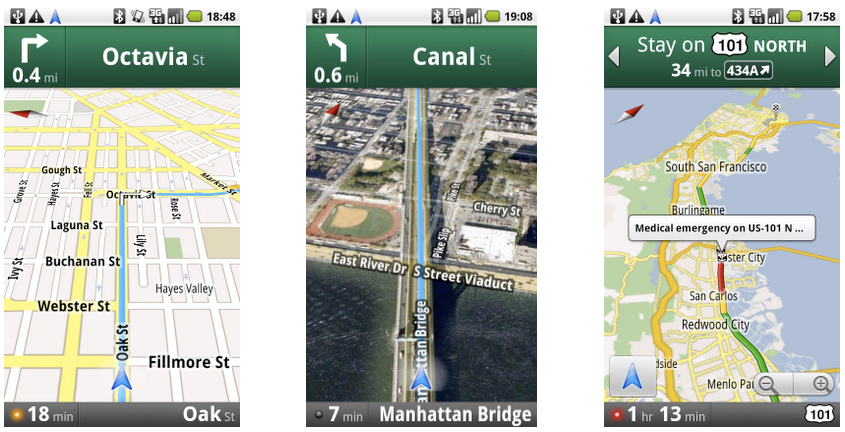
Garmin‘s stock dropped 16% that day. TomTom dropped 21%. In a single announcement, Google made the core product of a $14B industry worthless.
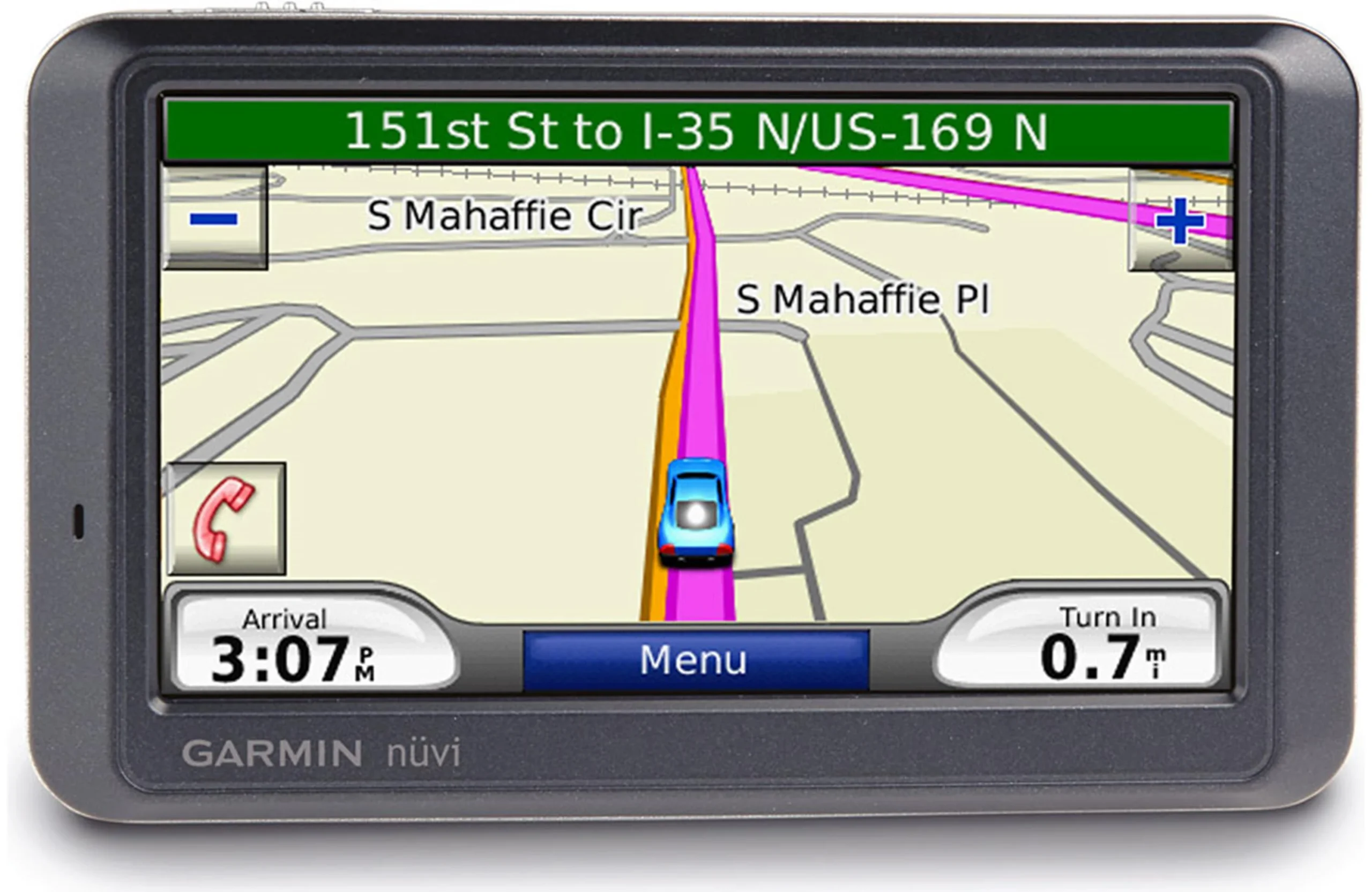
Before that day, if you wanted GPS navigation in your car, you paid $150-300 for a dedicated device from Garmin, TomTom, or Mio. The maps were outdated the moment you unboxed it. Updates required connecting the device to a PC, downloading data, and sometimes paying for the new maps. The interface was clunky. Satellite signal dropped constantly.
Google Maps did all of it better. For free. On a phone you already owned.
TomTom stopped selling GPS devices in the US and Canada in 2024. Mio hasn’t launched a new product in five years. Garmin survived by pivoting to fitness wearables and aviation. The dedicated GPS navigation device is dead.
And Google Maps makes more money giving navigation away for free than the GPS companies ever made charging for it.
The setup
Google Maps launched in 2005 as a web-based mapping tool. The original version was just maps and directions. No navigation. No real-time traffic. No Street View. Just a better-looking MapQuest.
The acquisitions that built it:
→ Where 2 Technologies (mapping startup, acquired 2004, became the foundation of Google Maps)
→ Keyhole (satellite imagery, acquired 2004, became Google Earth)
→ ZipDash (real-time traffic data, acquired 2004)
→ Waze (crowdsourced traffic and navigation, acquired 2013 for $1.1B)
Google spent years building the mapping infrastructure before giving away navigation. Street View cars started driving in 2007. By 2009 they had enough data, enough satellite imagery, and enough real-time traffic information to offer a navigation product that was objectively better than anything Garmin or TomTom sold.
The decision to make it free wasn’t generosity. It was strategy.
💡 Give away the product. Sell the intent data the product generates.
The play
1. Free navigation killed an industry because the incumbents couldn’t compete on price
The GPS device business model was hardware + map data. Buy the device for $200. Pay for map updates periodically. The margins were good. Garmin had 40%+ gross margins on its automotive GPS segment in 2008.
Google’s navigation was free because Google wasn’t selling navigation. Google was selling something the GPS companies didn’t even understand they were competing against: local search intent.
When you open Google Maps and search “coffee near me,” that’s an ad opportunity. When you navigate to a restaurant, that’s an ad opportunity. When you look for a gas station on a road trip, that’s an ad opportunity. Every interaction with Google Maps generates location data and search intent that feeds Google’s ad business.
Garmin and TomTom couldn’t match free. Their entire business model depended on charging for the product. If they gave away navigation, they had no revenue. They didn’t have an ad platform. They didn’t have a search engine. They didn’t have the business model infrastructure to make free work.
This is the classic disruption pattern. The incumbent’s business model prevents them from responding to the disruptor’s pricing. Garmin couldn’t make GPS navigation free any more than newspapers could make news free. The economics don’t work unless you have an entirely different revenue model on the backend.
2. The map is the loss leader for the ad business
Google Maps generated an estimated $11.1B in revenue in 2023. 82% of that came from advertising. Promoted pins, local search ads, sponsored listings.
The business model:
→ 2B+ monthly active users (the largest mapping platform on earth) → Users search for businesses, restaurants, services = high purchase intent
→ 2.5M+ businesses use promoted pins to appear at the top of local search results
→ Average CPC (cost per click) on Maps ads = ~$1.38
→ 73% of US businesses and websites use Google Maps API
→ 25% of Google Maps searches contain a business name
The navigation is free because navigation gets people into the app. Once in the app, users search for things. Searches generate ads. Ads generate revenue.
It’s the same model as Google Search. Search is free. The ads attached to search results generate $237B/year. Google Maps is a localized version of the same play. The map is the interface. The real product is the connection between a user with intent (“I need coffee”) and a business willing to pay to fulfill that intent.
The API business adds another layer. Uber, DoorDash, Airbnb, Lyft, Instacart, every delivery app, every ride-hail app, every travel app uses Google Maps API. They pay per API call. Google Maps Platform generates roughly $1.5-2B/year from API fees alone. Every time you see a map embedded in an app, there’s a good chance Google is getting paid for it.
3. Location data feeds every other Google product
Google Maps isn’t just an ad platform. It’s a data collection system that makes every other Google product better.
When you use Google Maps, Google learns:
→ Where you live (home address)
→ Where you work (daily commute pattern)
→ Where you shop (retail visits)
→ Where you eat (restaurant visits)
→ How long you stay (dwell time at locations)
→ Which routes you take (commute patterns)
→ When you travel (vacation patterns)
This data, aggregated and anonymized (according to Google), feeds Google’s ad targeting across all its products. If Google knows you visit fitness centers frequently, it can target fitness ads to you on YouTube. If Google knows you commute through a specific neighborhood, it can show you relevant local business ads in Search.
Google also sells aggregated mobility data to businesses. Retail planning, urban analytics, real estate development, transportation planning. “How many people pass through this intersection daily?” “What’s the foot traffic pattern for this shopping center?” This data product is growing as a separate revenue stream.
The dedicated GPS companies had none of this. TomTom knew where you drove. But TomTom didn’t have a search engine, an ad platform, a video platform, or an email service to cross-pollinate that data with. The GPS device was a standalone product. Google Maps is a node in a data network.
This is why competing with Google Maps on price is impossible. Even if you built an identical mapping product and gave it away for free, you couldn’t monetize it the same way unless you also had a search engine, an ad network, and 4B+ users across your product ecosystem. Google Maps’ moat isn’t the map. It’s everything else Google owns that the map feeds into.
The Waze acquisition in 2013 for $1.1B is worth understanding in this context. Waze was the only mapping product with a genuine competitive advantage Google didn’t have: crowdsourced real-time data from drivers (speed traps, accidents, police, road closures, cheap gas). Apple and Facebook both reportedly tried to acquire Waze. Google bought it to prevent a competitor from getting a data source that could have differentiated an alternative mapping product. Google kept Waze running as a separate app (it still operates independently with ~150M monthly users) while absorbing its traffic data into Google Maps. One acquisition eliminated the only data advantage an alternative mapping product could have used to compete.
The payoff
$11.1B revenue in 2023. 2B monthly users. 200M+ businesses listed. The most used app on the planet after YouTube and Chrome.
Did Google Maps actually kill the GPS industry, or did the smartphone kill it? Both. The smartphone was the hardware disruption (why carry a separate device when your phone has GPS?). Google Maps was the software disruption (why pay for navigation when it’s free and better?). Apple Maps launched in 2012 and was terrible (infamously directing people to drive onto airport runways). It’s improved since, but Google Maps had a 7-year head start in data collection. Waze, which Google acquired in 2013, added crowdsourced real-time reporting (speed traps, accidents, road closures) that neither Apple nor the GPS companies could match. The combination of free software + better data + phone you already own was unstoppable.
What does TomTom actually do now? TomTom pivoted to licensing its mapping data to automotive manufacturers. When you use the built-in navigation in a Volkswagen, Toyota, or Chrysler, the maps are often supplied by TomTom. It’s a B2B licensing business now, not a consumer products company. Revenue is lower but stable. They also license to app developers who don’t want to be dependent on Google. It’s a real business. But it’s a fraction of what the consumer GPS market once was. The company that once competed with Google head-to-head now licenses data to car manufacturers and hopes self-driving cars will need its maps.
Is Google Maps a monopoly? 80%+ market share in mobile mapping. 73% of US businesses use Google Maps API. 2.5M businesses pay for promoted pins. If a small restaurant doesn’t appear on Google Maps, it essentially doesn’t exist for a huge portion of potential customers. Google argues competition exists (Apple Maps, Waze which Google also owns, HERE Maps). The EU and US DOJ have been examining Google’s mapping dominance as part of broader antitrust investigations. The complication: Google Maps is free. Traditional monopoly arguments center on companies charging too much. Google’s argument is that a free product can’t be anti-competitive. The counterargument: when a product is free but generates $11B in ad revenue and controls 80% of market share, “free” is a pricing strategy, not charity.
What happens when Google Maps becomes a commerce platform? Google has been quietly adding transactional features. Book a restaurant reservation directly in Maps. Order food delivery. Book a hotel. Schedule a haircut appointment. Buy movie tickets. Each transaction keeps the user inside Google’s ecosystem instead of sending them to Yelp, OpenTable, or a restaurant’s own website. If Maps becomes the place where people not only find businesses but transact with them, Google captures the full loop: discovery → intent → transaction → data. That’s what Amazon does with product search. Google Maps is becoming the Amazon of local commerce. And unlike Amazon, the consumer never pays Google directly. The businesses pay through ads and transaction fees. The consumer gets everything for free. Which makes it very hard to argue against from a consumer welfare standpoint, even if the competitive dynamics are suffocating for every other local discovery platform.
Further reading
Google Maps Statistics 2025 (ElectroIQ, March 2025) ↗ $11.1B revenue. 82% from ads. 2.5M businesses using promoted pins. The full data picture.
Game Over: GPS Navigators Quietly Admit Defeat (AutoEvolution, Jan 2024) ↗ TomTom stops selling GPS devices in the US. Mio hasn’t launched a product in 5 years. Garmin pivots to fitness. The end of the standalone GPS era.
How Google Maps Makes Money (ProductMint) ↗ The business model breakdown. Local ads, API fees, promoted pins. How the free product generates billions.
→ What product in your industry could a tech company give away for free because they’d make more money from the data it generates than you make from selling it? That’s the disruption vector most incumbents never see coming.
Leave a Reply