
The technology Elizabeth Holmes described would have been genuinely revolutionary. Run 200+ blood tests from a single finger prick. Results in minutes instead of days. A fraction of the cost of traditional lab work. No more needles, no more vials, no more waiting. If the Edison device had actually worked, it would have changed diagnostics the way the smartphone changed communication. The idea was correct. The world wants this.
But wanting something to exist and building it are different problems. Pets.com’s idea was right but the infrastructure wasn’t ready yet (and Chewy later proved it). Theranos’s idea was right but the physics didn’t cooperate. You can wait for shipping costs to drop. You can’t wait for microfluidics to do something that microfluidics can’t do.
Out of 300 tests Theranos developed, only 12 ever ran on the Edison. The other 288 ran on commercial machines from Siemens and other manufacturers that Theranos had bought and modified. During investor demonstrations, the Edison would run a fake protocol while the actual blood sample was being tested on those third-party machines in another room. The investors watched the Edison. The Edison wasn’t doing anything.
Holmes raised over $700M. Peak valuation hit $9B. She was worth $4.5B on paper at 30 years old. Youngest self-made female billionaire in history. Then John Carreyrou at the Wall Street Journal published his first story in October 2015, sourced largely from a whistleblower named Tyler Shultz, who happened to be the grandson of board member George Shultz.
Holmes was convicted on four counts of wire fraud in January 2022. Sentenced to 11 years and 3 months. Her appeal was denied in December 2025. She’s serving time in Bryan, Texas. Ramesh “Sunny” Balwani, her former partner and Theranos COO, got 155 months. Restitution order: $452M.
Sponsored by HubSpot

100+ ChatGPT Prompts to Revolutionize Your Day
Supercharge your productivity with HubSpot’s comprehensive guide. This free resource is your fast track to AI mastery:
- Industry-Specific Use Cases: 15+ real-world applications across various sectors
- Productivity Guide: 21 best practices to 10x your efficiency with AI
- Prompt Powerhouse: 100+ ready-to-use prompts for immediate implementation
- Challenge Buster: Overcome common AI hurdles with expert strategies
Plus, in-depth sections on email composition, content creation, customer support, and data analysis.
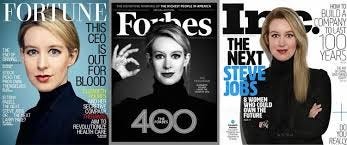
The fraud is documented. What’s more interesting is the question of how it lasted so long. Holmes dropped out of Stanford at 19 in 2003 to start the company. The first Carreyrou article ran in 2015. That’s 12 years of raising money, hiring employees, partnering with Walgreens and Safeway, placing the Edison in pharmacies where real patients got real results on real medical decisions, and nobody with the power to stop it actually checked whether the device worked.
The board is the place to start. Kissinger. Shultz. Mattis. Sam Nunn. William Perry. These are some of the most accomplished people in American public life. And none of them had any background in medicine, diagnostics, biotech, or laboratory science. The board of a blood-testing company had zero domain expertise in blood testing.
So why were they there? Because Holmes recruited them. She was disciplined about it. Get one prestigious name, use that name to recruit the next one. Kissinger joins and suddenly George Shultz thinks “if Henry’s in, this must be serious.” Shultz joins and Mattis thinks the same thing. Each new name validates the company not through diligence but through association. Nobody on the board evaluated the Edison’s technical claims because nobody on the board was qualified to evaluate them. They were there for credibility, not oversight.
This is how prestige laundering works. You borrow credibility from people who have it and attach it to a claim they haven’t verified. The investor sees the board list and thinks: Kissinger and Mattis wouldn’t put their names on something fake. But Kissinger and Mattis didn’t verify it. They assumed someone else had. Everyone in the chain is trusting someone else’s judgment rather than forming their own.
The investors made the same mistake. Rupert Murdoch put in $125M. The DeVos family put in $100M. Larry Ellison invested. The Walton family invested. These are sophisticated people who’ve made billions in business. But blood-testing technology isn’t media or retail or software. The investors relied on the board’s credibility rather than commissioning independent technical validation of the Edison. Murdoch could have hired any diagnostics lab in the country to test the device. He didn’t. The board list was enough.
The Walgreens partnership is where the gap between the pitch and the reality starts getting dangerous. Walgreens invested $140M in the partnership. Theranos set up “wellness centers” in 40 Walgreens stores in Arizona. Real patients came in. Real finger pricks were performed. Real test results were sent to real doctors who made real medical decisions based on them.
Theranos was generating 890,000 test results per year. Many of those results were inaccurate. Patients received false positives and false negatives on tests for HIV, blood clotting, and thyroid function. Doctors adjusted medications and treatments based on results that were wrong. Pets.com lost investors’ money. Theranos risked patients’ health. Different category of failure entirely.
The company’s own lab director concluded by 2015 that the technology was malfunctioning in ways that produced misleading results. Internally, people knew. Tyler Shultz, who worked at Theranos and saw the problems firsthand, tried to raise concerns through internal channels. When that didn’t work, he went to the Wall Street Journal. His grandfather George Shultz, the board member, initially sided with Holmes over his own grandson. The board’s loyalty to Holmes was stronger than their willingness to hear that the product didn’t work.
Holmes used trade secrecy as a shield against scrutiny. Whenever anyone asked how the Edison actually worked, the answer was “we can’t discuss that, it’s proprietary.” Some degree of IP secrecy is normal at tech companies. But Holmes used it to block any outside evaluation of the core technology entirely. Nobody peer-reviewed the science, nobody independently tested the device, nobody validated the results against conventional lab equipment. The only people who knew the Edison didn’t work were the engineers inside the company, and they were bound by NDAs and a culture of fear that Holmes and Balwani enforced.
The Carreyrou investigation changed everything. But even after the first article, Holmes pushed back aggressively. She went on CNBC, on Jim Cramer’s show, calling the reporting false. She hired David Boies (one of the most expensive lawyers in the country, who was also a Theranos board member and investor) to threaten former employees and journalists. The company fought for another year and a half before the Centers for Medicare & Medicaid Services (CMS) revoked Theranos’s lab certification in 2016 and the company started unwinding.
The financials tell the scale of the deception. Theranos had zero revenue in 2012 and 2013. Lost $57M in 2012, $92M in 2013. Even in 2015, after the Walgreens partnership was operational, total income was under $2M. Holmes told investors the company was on track for $100M in revenue. She showed them financial projections with Pfizer’s logo on them, implying a partnership that didn’t exist. Pfizer had done a small study with Theranos. They never endorsed the technology.
The comparison to Pets.com is useful because it shows the boundary between “too early” and “fraud.” Pets.com had a working product (a website that sold pet supplies) with broken economics (negative margins, unsustainable CAC). The product worked. The business model didn’t. If you fixed the economics, you’d have Chewy.
Theranos had a broken product with a fictional business model. The Edison didn’t work. The financial projections were fabricated. The partnership claims were exaggerated or false. There was nothing underneath the pitch. If you removed the fraud, you’d have nothing.
The distinction matters because Silicon Valley runs on optimism and a tolerance for “fake it till you make it.” Demo day pitches exaggerate traction. Seed decks project hockey-stick growth that founders know is aspirational. Series A companies talk about product-market fit they haven’t proven. Some gap between the pitch and the current reality is normal and expected.
The question is where the line is. And Theranos suggests the line is somewhere around “running fake demos for investors while real patients receive inaccurate medical results.” But between a demo day exaggeration and outright fraud, there’s a wide grey zone that most of Silicon Valley operates in. Holmes was on the far end of that spectrum. But the spectrum exists, and the same social dynamics that enabled Theranos (prestige on the board substituting for technical diligence, investors trusting other investors’ judgment, trade secrecy preventing outside evaluation) operate in much smaller, less dramatic ways at companies that aren’t committing fraud.
- Why didn’t any investor commission an independent technical evaluation? $700M in total investment. An independent lab could have tested the Edison for $50,000. Nobody did it. This is partly about prestige laundering (if Kissinger’s on the board, the technology must work). But it’s also about how VC works at the later stages. By the time Murdoch was writing a $125M check, earlier investors had already validated the company through their participation. Murdoch wasn’t evaluating the Edison. He was evaluating the cap table. “If these people invested, it must be legitimate.” The cap table becomes the diligence. Which works until it doesn’t.
- Could the technology have eventually worked? Miniaturized blood testing is a real field with real progress. Companies like Genalyte (acquired by Abbott in 2021) and Sight Diagnostics have built devices that run multiple tests from small blood samples. The physics isn’t impossible. But Holmes claimed capabilities that were years or decades ahead of what the science could deliver, and instead of admitting the gap, she faked the results. The tragedy is that a more honest company with the same ambition might have made genuine progress by now. Instead, the Theranos scandal made investors and regulators more skeptical of the entire point-of-care diagnostics category. Holmes didn’t just defraud investors. She set the field back.
- What does it mean that the board sided with Holmes over George Shultz’s own grandson? Tyler Shultz went to his grandfather with evidence that Theranos was lying about its technology. George Shultz chose to believe Holmes. The company sent lawyers after Tyler. His family relationships fractured over it. This is prestige laundering at its most personal. When the credibility you’ve lent to a company conflicts with evidence from someone you trust, the credibility wins because admitting the problem means admitting you were wrong. The sunk cost isn’t just financial. It’s reputational. Shultz couldn’t face the possibility that he’d attached his name to a fraud. So he chose not to see it.
Holmes is in prison. Balwani is in prison. The appeal is done. The $452M restitution order stands. The Edison device sits in a warehouse somewhere, a printer-sized box that ran 12 tests out of 300 and fooled some of the most powerful people in the country.
Further reading
- Elizabeth Holmes loses appeal: conviction upheld (InvestmentNews, Dec 2025): Appeal denied. 135 months for Holmes, 155 for Balwani. $452M restitution. Only 12 of 300 tests ran on the Edison. Fake demos for investors.
- Bad Blood: Secrets and Lies in a Silicon Valley Startup (John Carreyrou, 2018): The definitive account. Carreyrou’s investigation from the first WSJ article through the collapse. Tyler Shultz, the fake demos, the culture of fear, the Walgreens partnership.
- How Theranos’ faulty blood tests got to market (The Conversation, 2025): The regulatory gap. How 890,000 test results per year reached real patients. What the FDA and CMS missed and why.
That’s all for today. I’m going to go stare at my laptop and pretend I’m thinking strategically. See you Monday.
Leave a Reply