
Try to remember what the internet felt like in 1995. No Amazon Prime. No Uber. No Airbnb. If someone on a website asked you to mail them a check for $50 and they’d mail you a used Nintendo 64, your gut reaction was: absolutely not.
Strangers sending money to strangers. Strangers shipping goods to strangers. No guarantees. No insurance. No recourse. The idea that this could work at scale seemed crazy.
Pierre Omidyar didn’t think so. He built AuctionWeb (later renamed eBay) on Labor Day 1995 as a weekend project. One of the first items sold was a broken laser pointer for $14.83. Omidyar emailed the buyer to confirm they knew it was broken. The buyer said: “I’m a collector of broken laser pointers.”
Six months later, the community had grown to several hundred users and Omidyar faced the fundamental problem of peer-to-peer commerce: how do you make strangers trust each other?
His answer was a feedback system. Simple. Two-sided. Public. After every transaction, buyer and seller rate each other. The ratings accumulate into a reputation score visible to everyone. Good behavior builds reputation. Bad behavior destroys it.
That system, launched in February 1996, became the infrastructure for every peer-to-peer marketplace that followed. Airbnb’s host ratings. Uber’s driver ratings. Amazon’s seller ratings. Etsy’s shop reviews. Every time you check a rating before buying something online, you’re using a system Omidyar invented 30 years ago because he believed most people are honest but needed a way to prove it.
Before we begin… a huge thank you to this week’s sponsor.
Stop guessing, start listening continuously.

In a world that’s constantly changing, the best decisions come from data that’s current, connected, and grounded in real feedback from real people.
Built for teams with “full plates” (and zero time), SurveyMonkey programs make it simple to transition from the one-off survey to a continuous feedback loop.
Instead of starting with a blank page, you get a built-in roadmap informed by 25+ years of survey expertise. Programs suggest how often surveys should be sent and let you see how sentiment evolves over time, so your metrics finally have context.
No more stale snapshots. Run feedback programs that power smarter decisions.
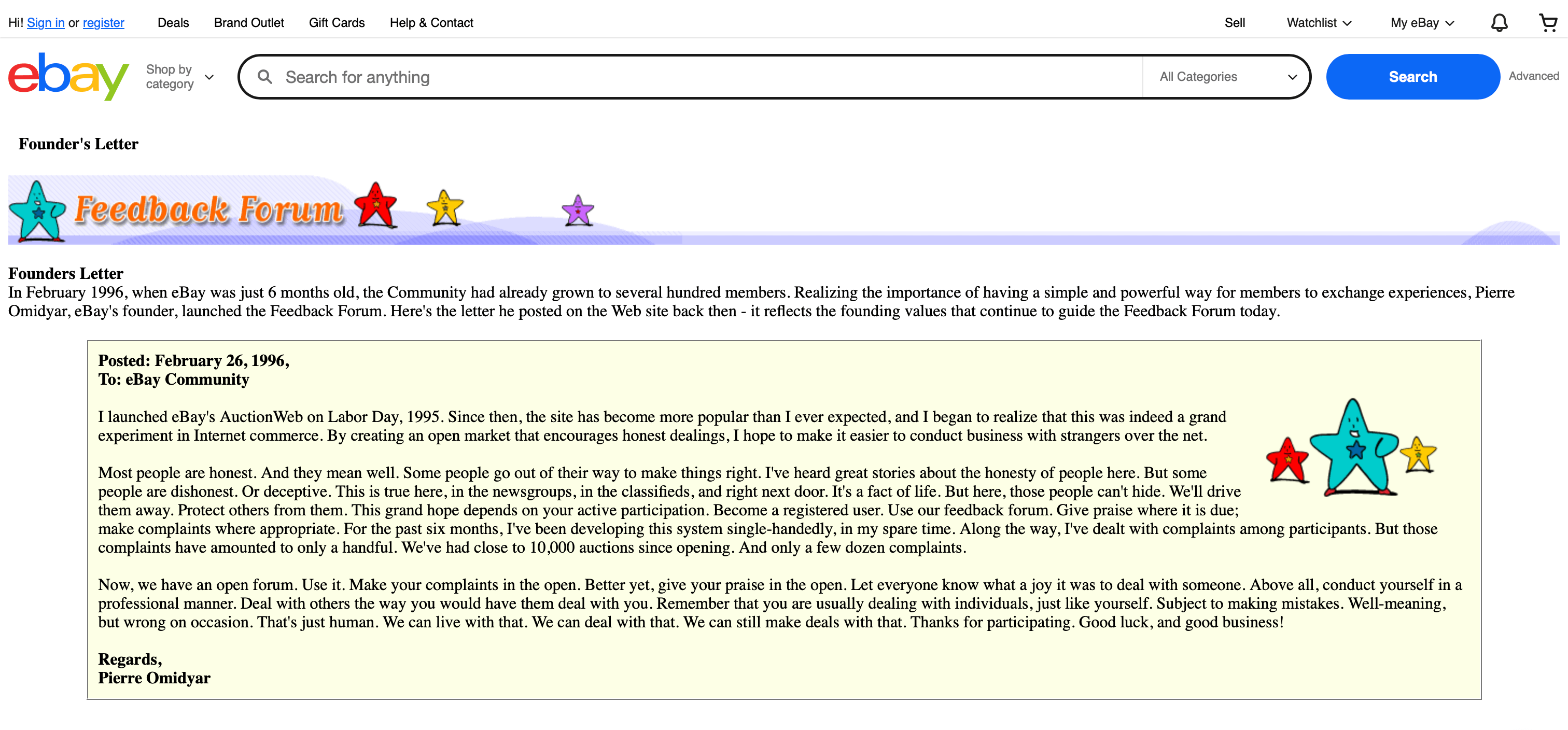
The letter Omidyar posted on February 26, 1996 is still live on eBay’s servers. It reads like a community manifesto, not a product announcement.
“I launched eBay’s AuctionWeb on Labor Day, 1995. Since then, the site has become more popular than I ever expected, and I began to realize that this was indeed a grand experiment in Internet commerce. By creating an open market that encourages honest dealings, I hope to make it easier to conduct business with strangers over the net.”
Then the line that matters: “Most people are honest. And they mean well… But some people are dishonest. Or deceptive. This is true here, in the newsgroups, in the classifieds, and right next door. It’s a fact of life. But here, those people can’t hide.”
The feedback system was simple:
- After every transaction, both buyer and seller leave a rating (positive, neutral, or negative)
- Each rating includes a short text comment
- All ratings are public and attached to your profile permanently
- Your cumulative score appears next to your username everywhere on the site
- Star icons indicate reputation tiers (yellow star = 10+, blue = 50+, turquoise = 100+, etc.)
- Anyone can click your profile and read every review you’ve ever received
No algorithm. No weighting. Just a running count of how many people said you were trustworthy. And it worked.
The system sounds obvious now. Rate people after a transaction, show the score, let others decide. But in 1996, nobody had tried it. And the effects were bigger than Omidyar expected.
1. Reputation as currency solved the zero-trust problem
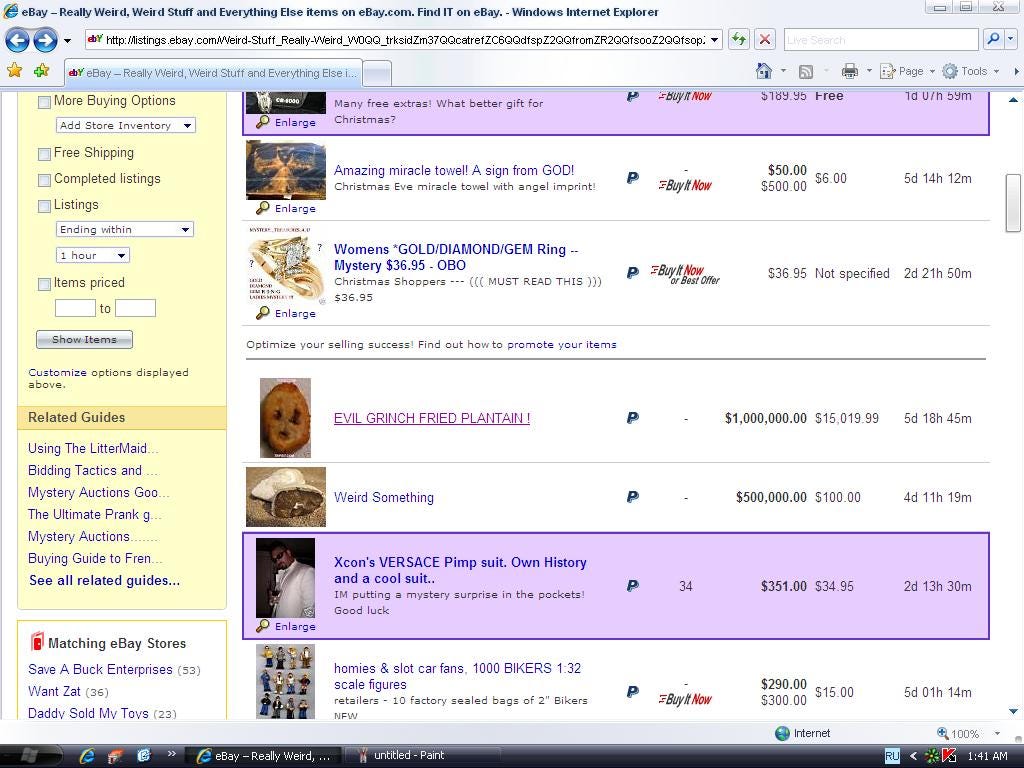
Before eBay, buying from a stranger meant newspaper classifieds or Craigslist (which launched the same year). You showed up with cash, looked at the thing, and hoped the person wasn’t lying about the condition. There was no way to know if someone was trustworthy until you were already standing in their living room.
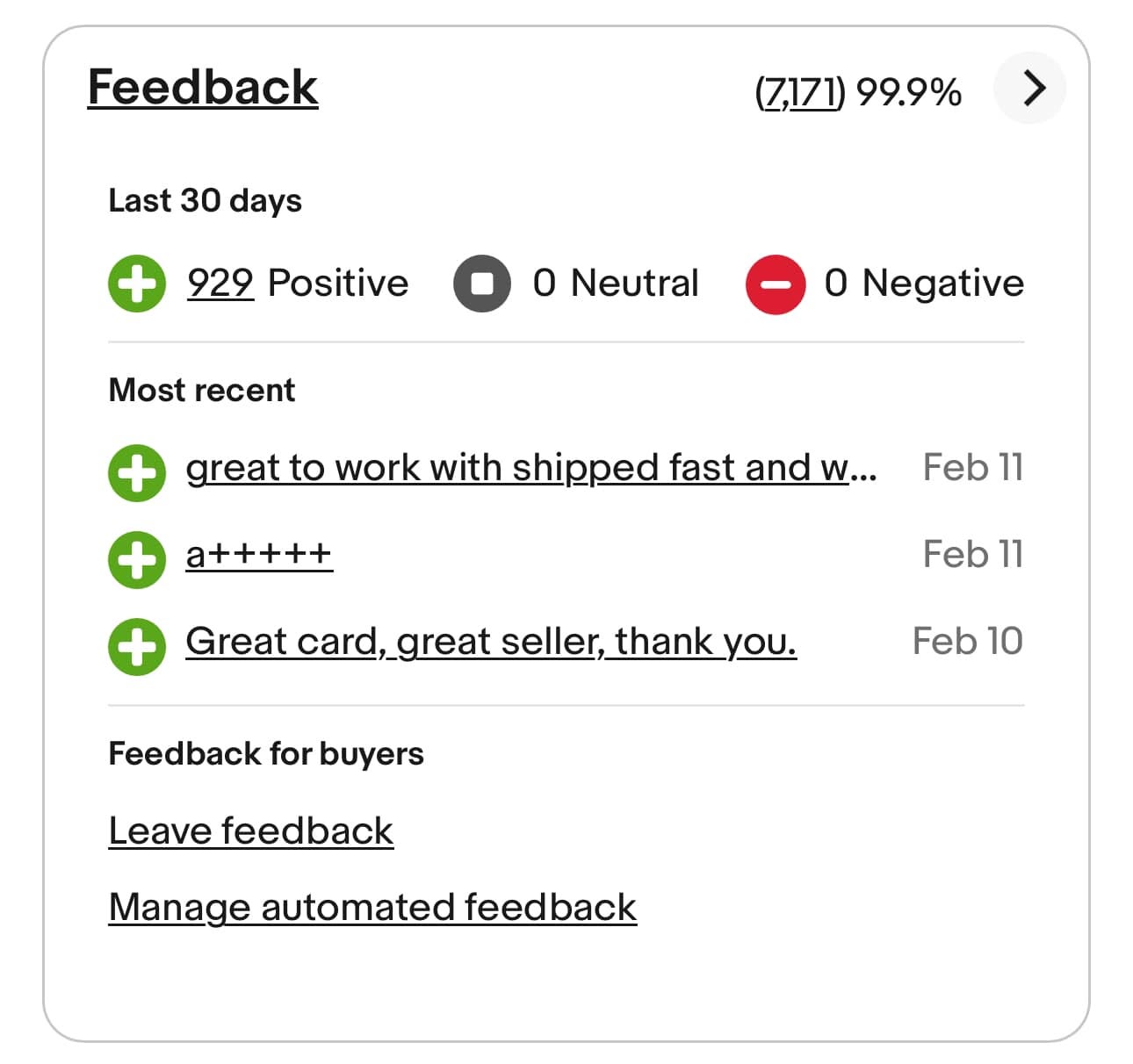
eBay’s feedback system created something that didn’t exist on the internet: portable reputation. Your score followed you across every transaction. A seller with 500 positive reviews and 99.8% positive feedback was objectively a safer bet than a seller with 3 reviews and no history.
This changed how people actually bought things. Researchers at the University of Michigan found that sellers with higher feedback scores got higher bids for identical items. Same product. Higher price. Just because the seller had more positive reviews. Reputation had literal dollar value.
The system also made people behave better through simple cause and effect:
- Sellers shipped quickly and described items honestly because one negative review could kill their sales
- Buyers paid on time and communicated clearly because sellers could rate them back (until 2008, when eBay removed seller-to-buyer negative feedback)
- Scammers got exposed fast because bad ratings followed them everywhere. Creating a new account and starting from zero was itself a red flag
The academic term for this is “reputation mechanism.” The practical version is simpler: millions of people started mailing checks to strangers and receiving used electronics in return. By 2000, eBay hosted 264 million auctions per year.
2. The system created every marketplace trust model that came after
Every peer-to-peer marketplace that came after eBay copied some version of the same system:
- Amazon Marketplace (2000): Third-party sellers rated by buyers. Star ratings + written reviews. Seller feedback score visible on product pages. Directly modeled on eBay.
- Etsy (2005): Shop-level ratings. Star system. Review text. Transaction count visible. Almost identical to eBay’s.
- Airbnb (2008): Two-sided reviews. Hosts rate guests. Guests rate hosts. Both reviews published simultaneously to prevent gaming. Evolved version of eBay’s original two-sided system.
- Uber (2010): Five-star driver rating. Riders also rated by drivers. Below 4.6 = deactivation risk. Simplified eBay’s model for real-time, in-person transactions.
- Fiverr, TaskRabbit, Upwork: Service marketplace ratings. All variations on the same model. Feedback score = trust signal = conversion rate.
What’s worth noticing: every one of these companies solved a different problem (accommodation, rides, freelance work, handmade goods) but they all needed the same underlying infrastructure. Trust between strangers. And they all built it the same way. Omidyar’s model wasn’t just a good idea for auctions. It turned out to be the minimum viable trust layer for any transaction between people who don’t know each other.
Omidyar’s insight was structural: in a marketplace where participants are anonymous, the platform itself has to provide the trust layer. The product being sold doesn’t create trust (you can’t inspect a used camera through a website). The seller’s identity doesn’t create trust (they’re a stranger). Only their transaction history creates trust. And that history has to be public, accumulated, and visible at the point of decision.
Every marketplace since has copied this. The details change (stars vs thumbs up, one-sided vs two-sided, visible score vs hidden cutoff) but the core idea is the same: take past behavior, turn it into a public number, and show it to new people deciding whether to trust you.
The Airbnb version added something smart that eBay never figured out. Reviews are hidden until both people submit. You write your review of the host. The host writes their review of you. Neither one can see the other’s review until both are in. If only one person submits, the review publishes automatically after 14 days so nobody can stall indefinitely to game their rating.
This solves the obvious problem with eBay’s original system: if a buyer can see that the seller already left them a positive review, they feel pressure to reciprocate even if the experience was bad. And if a buyer leaves a negative review first, the seller retaliates with a negative review back. eBay dealt with this crudely in 2008 by removing sellers’ ability to leave negative feedback on buyers entirely. Airbnb’s approach is cleaner. You can’t see what they said about you until you’ve already said what you think about them. Both reviews are honest because neither is influenced by the other.
Fiverr and other two-sided marketplaces use the same double-blind model now. It’s become the standard for any platform where both sides rate each other.
3. The feedback system’s flaws reveal the limits of reputation
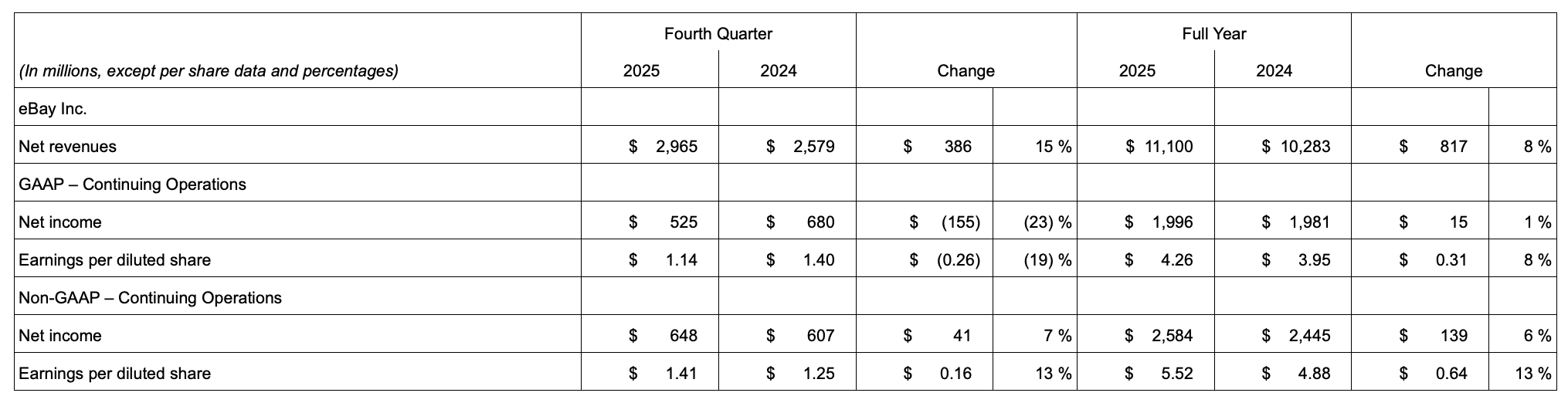
The system worked well enough to power $11.1B in eBay revenue by 2025. But it has real problems. And every marketplace that copied it inherited those same problems:
- Positivity bias. Over 99% of eBay feedback is positive. On Airbnb, 95% of listings are rated 4.5 or 5 stars. BU researchers found the average Airbnb rating is significantly higher than the average TripAdvisor hotel rating (which is 3.8). Not because Airbnbs are better than hotels. Because when both sides rate each other, both sides are nicer about it. People avoid confrontation. Leaving a negative review of a host who also has the power to review you feels risky, even with the double-blind system.
- Grade inflation. Uber drivers below 4.6 stars face deactivation. That means the functional rating scale is 4.6-5.0, not 1-5. A “4 star” ride is a bad ride in Uber’s system. Same problem on Airbnb. Superhosts need 4.8 or above. When the floor is 4.5, the ceiling is 5.0, and 95% of listings are in that range, the rating stops telling you anything useful. You’re choosing between “very good” and “slightly more very good.”
- Cold start problem. New sellers with zero feedback can’t compete. Buyers go with the seller who has 500 reviews, not the one with 2. This punishes newcomers and rewards incumbents regardless of actual quality. eBay added buyer protection guarantees to reduce the risk. Airbnb added professional photography and “New Host” badges. But the underlying dynamic hasn’t changed. A new participant on any review-based platform starts at a disadvantage, and the gap is hardest to close in the first 10-20 transactions.
- Gaming and manipulation. When reputation has dollar value, people will manufacture it. Fake reviews. Review exchanges (”I’ll give you 5 stars if you give me 5 stars”). Sellers offering discounts for positive feedback. Amazon’s review manipulation problem (estimated at 30-40% of reviews in some categories) is a direct descendant of eBay’s system. The incentive to game reputation is proportional to its economic value.
- Feedback as a weapon. Buyers threatening negative feedback to extract refunds they’re not owed. Sellers harassing buyers who left honest negative reviews. eBay had to create a “Feedback Extortion Policy” because the system it built was being used as leverage in disputes. The same reputation that builds trust also creates power dynamics. A buyer with 1,000 reviews threatening to leave a 1-star review has real power over a seller whose livelihood depends on their score.
All five problems share a root cause: the system compresses a continuous, complex experience into a single number and makes that number permanent. That compression is what makes it work (easy to understand, easy to compare). It’s also what makes it gameable, inflated, and blunt. The question nobody has answered in 30 years: how do you keep the simplicity that makes ratings useful while adding enough nuance to make them accurate?
Uber, Airbnb, Amazon, Etsy. They all have these same problems. The system Omidyar built in 1996 was good enough to make buying stuff from strangers on the internet possible. But “good enough” doesn’t mean solved.
eBay processed $79.6B in gross merchandise volume in 2025. 135 million active buyers. 2.5 billion live listings. The feedback system still runs on the same idea Omidyar posted on a webpage 30 years ago: let people rate each other, make the score public, and trust tends to follow.
Did eBay actually prove that “most people are honest”? Omidyar’s founding premise was that people are basically good. The feedback system’s data supports this. Over 99% of transactions on eBay result in positive feedback. Fraud rates on the platform are remarkably low given the volume. But there’s a selection effect. The feedback system doesn’t prove people are honest. It proves that visible, permanent, public accountability makes people behave honestly. Remove the feedback system and the fraud rate would almost certainly spike. Omidyar’s system didn’t discover honesty. It manufactured it.
Why hasn’t anyone built a portable reputation system across platforms? Your eBay reputation means nothing on Airbnb. Your Uber rating means nothing on Lyft. Your Amazon seller score means nothing on Etsy. Every platform forces you to build reputation from zero. A portable reputation system (one rating that follows you across platforms) would solve the cold start problem, reduce gaming (harder to start over with a fresh account), and create genuine accountability. Nobody has built it because platforms benefit from keeping reputation locked inside their walls. Your eBay reputation is a switching cost. If you could take your 500 positive reviews to a competing marketplace, you might actually leave. Reputation lock-in keeps sellers on the platform.
Is the star rating the best we can do? Five stars. Thumbs up/down. Positive/neutral/negative. These are blunt ways to compress a complex experience into one number. “Was this transaction good?” doesn’t tell you whether the seller shipped fast but the item was slightly different from the photos. Whether the communication was great but the packaging was terrible. Whether the price was fair but the return process was a nightmare. eBay added detailed seller ratings in 2007 (accuracy, shipping speed, communication as separate scores). Most users don’t bother filling them out. The simple overall score persists because it’s easy to understand and easy to leave. Could AI build something smarter from the same transaction data? Probably. But Omidyar’s simple feedback forum has been the default for 30 years. Simple tends to win.
Further reading
- eBay Founder’s Letter launching the Feedback Forum (eBay, Feb 1996): The original letter. Still hosted on eBay’s servers. “Most people are honest. And they mean well… But here, those people can’t hide.” The document that created online reputation.
- Reputation and Feedback Systems in Online Platform Markets (Steven Tadelis, UC Berkeley): Academic analysis. How eBay’s feedback system creates incentives for honest behavior. Evidence that higher reputation scores lead to higher sale prices.
- How eBay solved stranger danger (Strategy Breakdowns, Nov 2025): Tom Alder’s breakdown. The mechanisms eBay pioneered between 1995 and 2010 that became the blueprint for every modern peer-to-peer platform.
→ What transaction in your industry still doesn’t happen because strangers don’t trust each other enough? That trust gap is a marketplace waiting to be built. And the feedback system that unlocks it might be simpler than you think.
Leave a Reply