
Before we begin… a huge thank you to this week’s sponsor.
Stop guessing, start listening continuously.

In a world that’s constantly changing, the best decisions come from data that’s current, connected, and grounded in real feedback from real people.
Built for teams with “full plates” (and zero time), SurveyMonkey programs make it simple to transition from the one-off survey to a continuous feedback loop.
Instead of starting with a blank page, you get a built-in roadmap informed by 25+ years of survey expertise. Programs suggest how often surveys should be sent and let you see how sentiment evolves over time, so your metrics finally have context.
No more stale snapshots. Run feedback programs that power smarter decisions.
September 2016. Phil Schiller is on stage at the iPhone 7 launch. He has to explain to the world why Apple just removed a port that’s been on virtually every audio device since the 1960s. The 3.5mm headphone jack. Universal. Simple. Worked with everything.
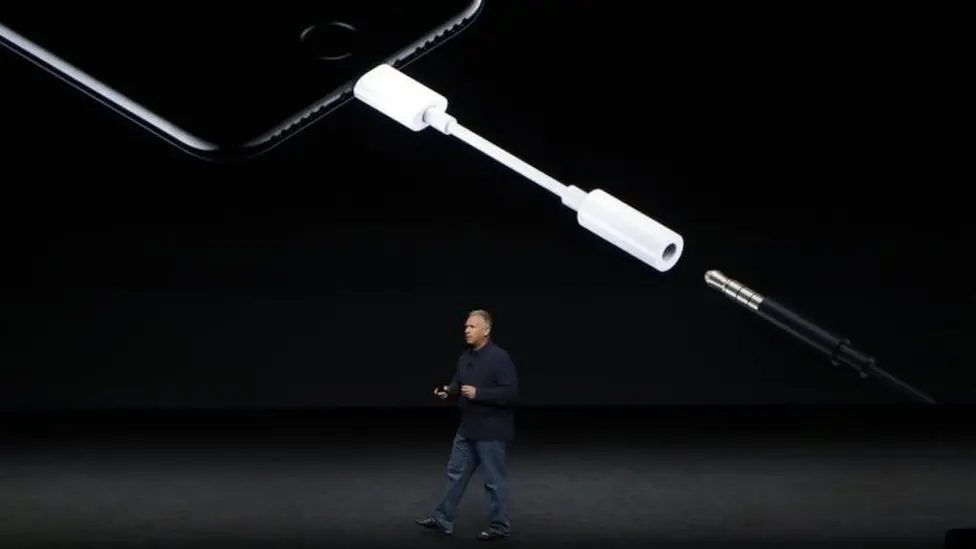
His explanation: “It really comes down to one word. Courage. The courage to move on, do something new, that betters all of us.”
The internet lost its mind. Petitions circulated. Tech reviewers called it arrogant. Samsung ran ads mocking Apple for removing features. Android fans were merciless. “Courage” became a meme overnight.
Apple included a Lightning-to-headphone-jack dongle in the box and a pair of Lightning EarPods. The dongle meant you could still use your old headphones, but you couldn’t charge your phone and listen to music at the same time. An obvious inconvenience that Apple seemed completely unbothered by.
Because Apple wasn’t selling you a phone with a missing feature. Apple was forcing a technology transition. And at the other end of that transition sat AirPods, announced the same day, shipping three months later.
By 2024, AirPods generated roughly $22B in annual revenue. Larger than Spotify, Nintendo, and eBay as standalone businesses.
The headphone jack removal wasn’t courage. It was strategy. And it worked because Apple understood something about its own customers that most companies don’t understand about theirs: they’ll complain loudly and buy anyway.
The setup
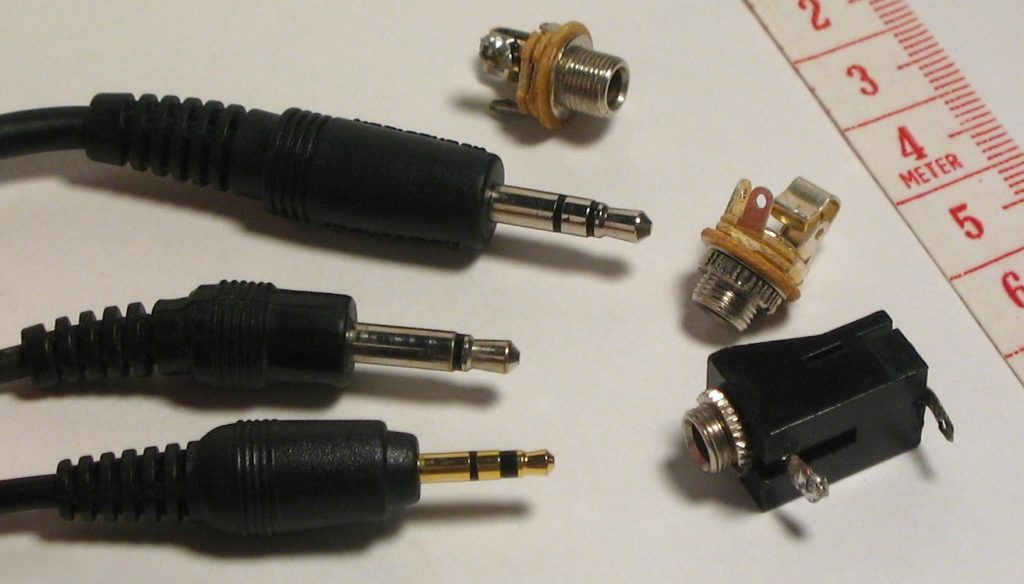
The 3.5mm jack is one of the oldest continuously used connectors in consumer electronics. It’s analog, simple, and universal. Every pair of headphones works with every device. No pairing. No battery. No compatibility issues. Plug in and it works.
Apple’s stated reasons for removing it from the iPhone 7:
→ Space. The jack takes up internal volume that could be used for other components (battery, Taptic Engine)
→ Water resistance. One fewer opening = better sealing
→ Wireless is the future. Time to push consumers forward
These reasons were partially true. The Taptic Engine (which powers haptic feedback) did expand into the space where the jack used to sit. Water resistance did improve. But these were justifications, not motivations.
The actual business logic:
→ Removing the jack creates friction for wired headphones (need a dongle, can’t charge simultaneously)
→ Friction pushes users toward wireless
→ Apple controls the wireless ecosystem (W1 chip, later H1 and H2, seamless pairing with iPhone)
→ Every Lightning headphone sold by any manufacturer pays Apple a licensing royalty
→ AirPods become the default wireless audio solution for 1B+ iPhone users
One product removal created an entirely new product category that Apple was positioned to dominate from day one.
💡 Remove a feature to create demand for the replacement you already built.
Breakdown
1. The removal was timed to the replacement being ready
Apple didn’t remove the headphone jack and hope wireless headphones would figure themselves out. AirPods were announced the same day as the iPhone 7. Same keynote. Same stage. The removal and the replacement were a package deal.
But AirPods were genuinely different from every Bluetooth headphone on the market in 2016. Bluetooth headphones at the time were annoying. Pairing was unreliable. You had to go into settings, search for the device, enter a PIN sometimes, and reconnect every time you wanted to use them. The experience was bad enough that most people didn’t bother.
Apple’s W1 chip changed this:
→ Open the AirPods case near your iPhone
→ a popup appears
→ tap “Connect”
→ done
→ AirPods automatically switch between your iPhone, iPad, Mac, and Apple Watch
→ Infrared sensors detect when they’re in your ears and pause music when you take one out
→ The charging case gives 24 hours of total battery life
Apple didn’t just make wireless headphones. They made wireless headphones that were easier to use than plugging in a cable. That’s the critical detail. If AirPods had the same clunky Bluetooth pairing experience as everything else, the headphone jack removal would have been a genuine usability downgrade. Instead, the wireless experience was actually better than the wired one. For most people. Most of the time.
The audiophiles screamed. The people who cared about sound quality and already owned $300 wired headphones were furious. But audiophiles are maybe 5% of the headphone market. The other 95% use whatever came in the box. Apple was optimizing for the 95%.
2. Brand loyalty absorbed the backlash
Apple knew the backlash was coming and decided to absorb it rather than avoid it.
iPhone 7 sales data showed something important: only 15% of iPhone 7 buyers were former Android users. The rest were iPhone upgraders. Apple’s existing customer base stayed. They complained on X/Twitter. They signed petitions. Then they bought the phone anyway because they were already inside the Apple ecosystem (iMessage, iCloud, Apple Watch, apps they’d purchased) and switching to Android over a headphone jack wasn’t worth the disruption.
This is the power of ecosystem lock-in. Apple could make a legitimately unpopular product decision because the switching costs to leave were higher than the annoyance of adapting to the change. No other phone manufacturer could have pulled this off. Samsung, Google, OnePlus, they all kept the headphone jack initially and used it as a selling point against Apple. “We still have the jack.” It was a real differentiator for a brief window.
Then one by one they all removed it too. Google dropped the jack from the Pixel 2 in 2017. Samsung held out until the Galaxy Note10 in 2019. By 2020, the headphone jack was gone from essentially every flagship phone on the market.
Apple didn’t just remove a feature from its own product. It set a new standard for the entire industry. Every competitor eventually followed because Apple had proven the market would accept it, and because their own wireless headphone businesses (Samsung Galaxy Buds, Google Pixel Buds) needed the same push.
3. AirPods became an identity product, not just headphones
Something unexpected happened after AirPods launched. They became a cultural product.
The white stems sticking out of your ears were immediately identifiable. Unlike black or grey earbuds that blend in, AirPods were visible. Intentionally. The design that everyone mocked at launch (they look like someone cut the wires off) became a visual signal. AirPods meant you had an iPhone. AirPods meant you could afford $159+ for wireless earbuds. AirPods became a meme, then a status symbol, then a default.
The visibility drove word of mouth in a way that invisible earbuds never could. Every person wearing AirPods on the subway, in a coffee shop, at the gym was a walking advertisement for the product. Beats had done this years earlier with the over-ear headphones (bright colors, large logo, visible from across the room), but AirPods did it with earbuds, which are normally invisible.
AirPods also became a platform. AirPods Pro added active noise cancellation. AirPods Max moved into the premium over-ear market. Spatial Audio added directional sound for movies and music. Live Listen turned AirPods into hearing aids. Find My integration meant you could locate lost AirPods. Each generation added functionality that deepened the lock-in.
The upgrade cycle matters too. AirPods batteries degrade over 2-3 years (lithium-ion chemistry, unavoidable). They can’t be replaced by the user. So every AirPods owner becomes a repeat buyer on a 2-3 year cycle, similar to the iPhone upgrade cycle but for a lower-cost accessory. That recurring purchase is built into the product’s physical limitations.
Apple’s Wearables segment (AirPods, Apple Watch, Beats, HomePod) crossed $40B in annual revenue by 2022. AirPods alone account for roughly half of that. A product that didn’t exist in 2015 became one of Apple’s most important revenue streams within 6 years.
The payoff
Phil Schiller said “courage.” The internet said “arrogance.” The sales data said “doesn’t matter, they’ll buy it anyway.” All three were right.
Could any other company have done this? Probably not. Apple’s ecosystem lock-in (iMessage, iCloud, App Store purchases, Apple Watch compatibility) meant the switching cost of moving to Android was far higher than the annoyance of losing the headphone jack. Samsung or Google removing the jack first would have lost customers to competitors who still had it. Apple removed it first because it could afford the backlash. The luxury of having the most locked-in customer base in consumer tech is that you can make unpopular decisions and survive them.
Was the headphone jack removal actually good for consumers? Mixed. Wireless audio is genuinely more convenient for most people most of the time. No tangled cables. No accidental yanks that pull the phone off a table. Automatic pairing. These are real improvements. But: wireless earbuds cost more than wired ($159+ vs $10), they need charging, the batteries die permanently after 2-3 years (creating electronic waste), audio quality is lower than wired at equivalent price points, and you now have one more device to keep track of. Apple framed this as progress. Critics frame it as a company removing a free capability and selling the replacement for $159. Both readings are accurate simultaneously.
What does this model look like applied to other products? Apple has done this repeatedly. Kill the optical drive (MacBook Air 2008, then all Macs by 2012)
→ sell digital media through iTunes. Kill the USB-A port (MacBook 2015)
→ sell dongles and push USB-C adoption. Kill the home button (iPhone X, 2017)
→ enable Face ID and full-screen displays. Kill Intel (Mac transition to Apple Silicon, 2020)
→ control the entire hardware-software stack.
The pattern: remove a legacy component, accept short-term backlash, replace it with something Apple controls end-to-end, profit from the transition. The headphone jack was just the most visible example. It works because Apple’s customer base is loyal enough to tolerate the transition period and locked-in enough that leaving is more painful than adapting.
The 3.5mm jack had been standard for over 50 years. Apple killed it in one product cycle. Within 3 years every major phone manufacturer followed. AirPods went from mockery to ubiquity in the same window. The backlash didn’t slow adoption. It generated attention. And the attention sold more AirPods than any marketing campaign could have.
Further reading
- The real reason Apple killed the headphone jack (Headphonesty, March 2025) ↗ The business case behind “courage.” Licensing royalties on Lightning accessories, wireless ecosystem control, and the numbers that prove it worked.
- Apple’s courage to remove the headphone jack created a brave new world (Macworld, 2019) ↗ The retrospective three years later. AirPods went from goofy to essential. How Apple prioritized convenience over audio fidelity and the market agreed.
- Why Apple removed the headphone jack despite user backlash (Arthnova, Jan 2026) ↗ The backlash timeline, sales data showing 85% of iPhone 7 buyers were existing Apple users, and why ecosystem lock-in made the removal survivable.
→ What feature could you remove from your product that would force users toward something better you’ve already built? The backlash is the marketing. The transition is the business model.
Leave a Reply