
Next.js is the most popular React framework in the world. Millions of developers use it. It’s open source. Free.
Vercel, the company that built and maintains Next.js, is valued at $9.3 billion. They make money by selling the deployment platform that runs Next.js best.
If that sounds familiar, it’s the same play Red Hat ran with Linux and Elastic ran with Elasticsearch. Give away the software. Sell the infrastructure around it. But Vercel did something those companies didn’t: they made the free product so good that using anything else to deploy it feels like driving a Ferrari on a dirt road.
The setup
Guillermo Rauch founded Vercel (originally called Zeit) in 2015. Before that, he’d built Socket.io, one of the most-used open source libraries in the JavaScript ecosystem. The guy understood something about developer adoption: developers don’t pay for tools they haven’t already fallen in love with.
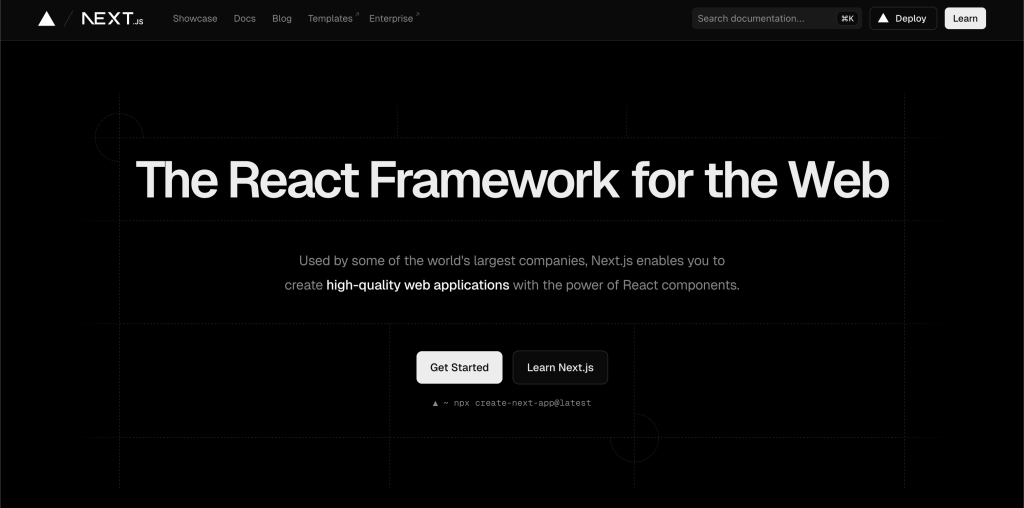
Next.js launched in 2016. Server-side rendering for React, which at the time was a pain to set up yourself. Next.js made it a single command. It took off.
By 2024, Next.js was the default React framework. Most new React projects start with it. It’s the framework Vercel maintains, contributes to, and optimizes their platform for.
The question is always the same with open source businesses: if the software is free, where’s the money?
💡 The play: Build the most popular framework in your ecosystem. Give it away. Then sell the best place to run it.
The play
1. Next.js is the top of the funnel
A developer learns React. They google “React framework” and Next.js comes up first. They use it because it’s free, well-documented, and everyone else uses it. They build something. Now they need to deploy it.
The Vercel “Deploy” button is right there in the Next.js docs. One click. The site is live. Free tier handles hobby projects. When traffic grows, you upgrade. $20/month for Pro.
The framework brings the developers. The platform keeps them. Every Next.js tutorial, every Stack Overflow answer, every YouTube video about Next.js is indirect marketing for Vercel’s paid platform.
2. The platform runs Next.js better than anyone else can
Here’s where it gets strategic. Vercel maintains Next.js. They also build the platform that deploys Next.js. So when they add a new feature to Next.js (like Server Components or Incremental Static Regeneration), they optimize it for Vercel’s infrastructure first.
You can deploy Next.js on AWS, on Netlify, on Cloudflare. It’ll work. But certain features work better or more easily on Vercel because Vercel built the feature and the infrastructure at the same time.
This is the advantage that pure hosting platforms (Netlify, Render, Railway) can’t match. They’re deploying someone else’s framework. Vercel is deploying their own.
3. Enterprise is where the real money is
The free and Pro tiers ($0 and $20/month) build the developer base. The Enterprise tier (custom pricing) is where the revenue concentrates.
When a large company’s engineering team is already using Next.js (because individual developers brought it in), upgrading to Vercel Enterprise is the path of least resistance. The devs already know the platform. The framework already runs on it. The only question is whether the company wants SLAs, SSO, and support.
Vercel raised $250M at a $3.5B valuation in 2024. The math works because they didn’t have to sell developers on the framework (it’s free) or on the platform (they already used it). They just had to sell the CFO on the enterprise contract.
The payoff
Vercel’s model only works because Next.js genuinely became the default React framework. If Next.js had stayed niche, the funnel would’ve been too narrow. The open source investment only pays off at massive adoption.
The risk is that somebody forks Next.js and runs it better on competing infrastructure. Cloudflare has been aggressive about this. AWS has Amplify. But as long as Vercel keeps being the team that maintains Next.js and ships new features first, they get a head start on optimization that competitors are always chasing.
Redis, MongoDB, and HashiCorp all grappled with this problem and eventually changed their licenses to protect the commercial business from cloud providers copying their open source. Vercel hasn’t had to yet, mostly because the advantage isn’t in the code. It’s in the tight loop between “we build the framework” and “we run the framework.”
Rabbit Hole
- Guillermo Rauch on building Vercel (Lenny’s Podcast) ↗ The founder on why giving away the framework is the distribution strategy. The Socket.io background. The “frontend cloud” vision.
- Vercel raises $300M at $9.3B (Bloomberg, 2025) ↗ The funding round. Why investors bet on a company whose primary product is free.
- The open source business model problem (a16z) ↗ The broader pattern. How Redis, Elastic, MongoDB, and others have navigated the tension between open source adoption and commercial revenue.
Leave a Reply